

Key Takeaways
- Couples may have options for staying close even when their care needs differ.
- Assisted living can provide daily support while leaving more room for shared routines and time together.
- Honest conversations about changing needs can help couples decide what feels right for them.
- Reviewing care costs, couples pricing, and financial assistance can help you plan ahead.
- Touring communities together helps you understand the available support and picture daily life as a couple.
When Life Changes for One Partner
You built a life together, and now your loved one needs a little more help with daily tasks. Maybe your partner needs support getting dressed, while you still enjoy long walks and morning coffee on your own. This shift can feel heavy, but it doesn’t have to mean giving up the routines and connection you’ve built together.
Many senior living communities let couples stay together, even when each partner needs a different level of care. You can share the same space, eat the same meals, and keep your daily rhythm while your partner gets the support they need.
When One Spouse Needs More Care
Health needs can change at different times for each partner. One person may remain active and independent, while the other begins needing help with everyday tasks like bathing, medication reminders or moving safely around the home.
When you’re supporting your partner day to day, it can be difficult to balance their needs with your own. Respite care may offer some support, giving you time to rest and recharge while your partner receives care.
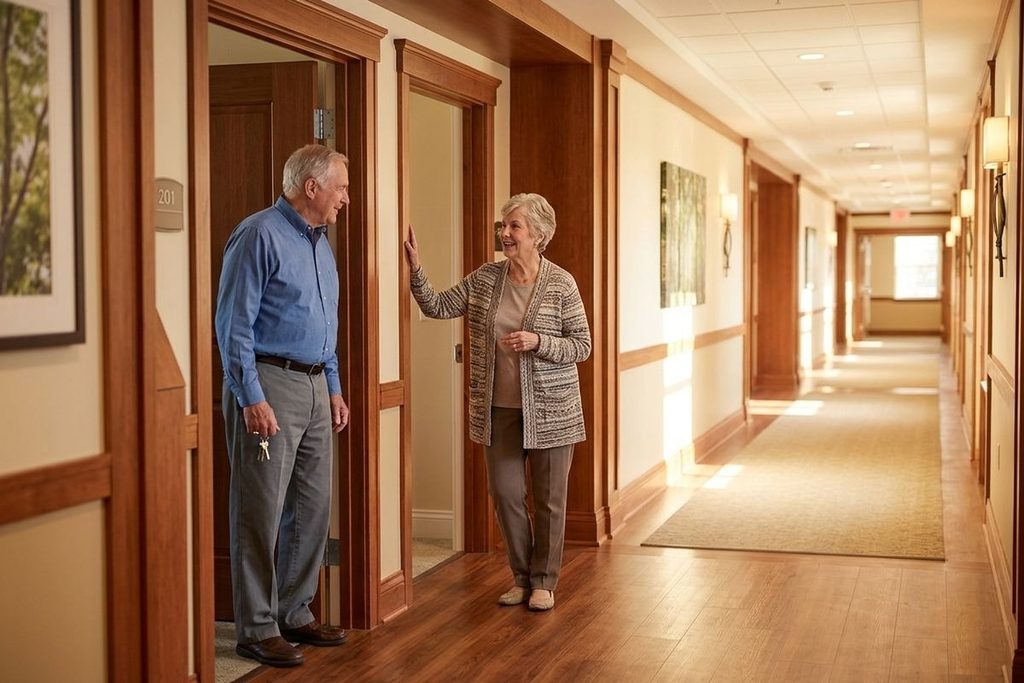
With assisted living, the day can hold more than managing daily tasks. Your partner can get help with their personal care and medications. That leaves more time for both of you to enjoy an afternoon stroll, play a card game, or catch up over your favorite meal together.
Care Options That Keep Couples Close
When one partner needs assisted living and the other doesn’t, couples may have options that help them stay connected while meeting their individual needs. Depending on the community, these may include:
- Different levels of care: One partner receives assisted living support while the other lives in independent living.
- Nearby apartments: Separate apartments on the same campus allow each partner to have their own space while remaining close by.
- Shared daily routines: Meals, walks, and activities offer opportunities to spend time together throughout the day.
The arrangement depends on each partner’s needs and the options available in the community. The goal is to help couples maintain their relationship and spend meaningful time together. Each partner can receive the support that best meets their needs.
A Conversation About Care
When you’ve shared decades of life with someone, small changes can carry a lot of weight. A favorite memory may no longer come as easily, or aching hands may mean spending less time in a once-loved garden. These changes can be difficult to acknowledge, let alone talk about.
Choose a quiet moment to share what you’ve noticed and listen to how your loved one feels. Talk openly about what each of you needs. Talk about what could make daily life easier, while keeping the things you cherish about life together at the heart of the conversation.
How to Plan the Financial Side of Care
Planning for care means looking at what you can afford and what each partner may need. Start by reviewing your finances and considering how your expenses could change.
- Review your monthly budget and compare it with the expected cost of care.
- Ask how couples pricing works, since sharing an apartment may affect the overall cost.
- Explore veterans’ benefits and insurance options that may help cover eligible care expenses.
You don’t have to work through every detail at once. Ask questions, talk through your options with the community team, and take the time you need to understand the costs before making a decision.
Choosing the Right Senior Living Community
Seeing a community in person can help you picture what daily life might look like for both of you. Tour communities together so you can share your impressions and ask how they support couples with different care needs. Take time to meet current residents and hear what they appreciate about daily life.
Pay attention to how team members interact with residents and how people connect throughout the day. These moments can help you picture daily life there and decide whether the community feels right for both of you.
Take the Next Step Together
Choosing assisted living when only one partner needs more care is a deeply personal decision. Your relationship is still yours, shaped by the routines, laughter, and little moments you’ve shared over the years. Take your time exploring your options and talking about what matters most to you both.
At Mira Vie Senior Living, assisted living offers personalized support with daily tasks and access to support staff 24/7, while making room for the activities, connections, and routines that bring meaning to each day. Our team provides the support so you can focus on your spark.
Contact us to schedule a tour and explore your options with your loved one.